From the blog
Water Before Meals: What the Trials Behind the 20 to 30 Minute Habit Show
The label says to stir one scoop into water 20 to 30 minutes before a meal. The research behind that timing is about the water, not the powder: in trials, about 375 to 568 mL of plain water before a meal reduced how much some people ate at that meal, most clearly in older adults, and two 12-week trials found roughly 1.3 to 2 kg more weight loss alongside a diet. Broader reviews are less certain, and pooled results across all water-intake trials were not significant. The effect looks real but small, and nothing here tests ElectroSlim itself.
What the label actually asks you to do
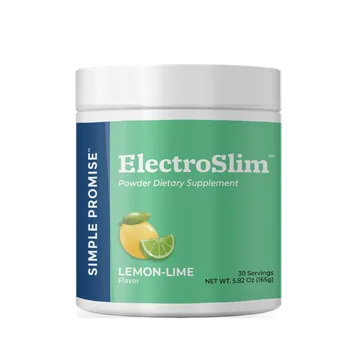
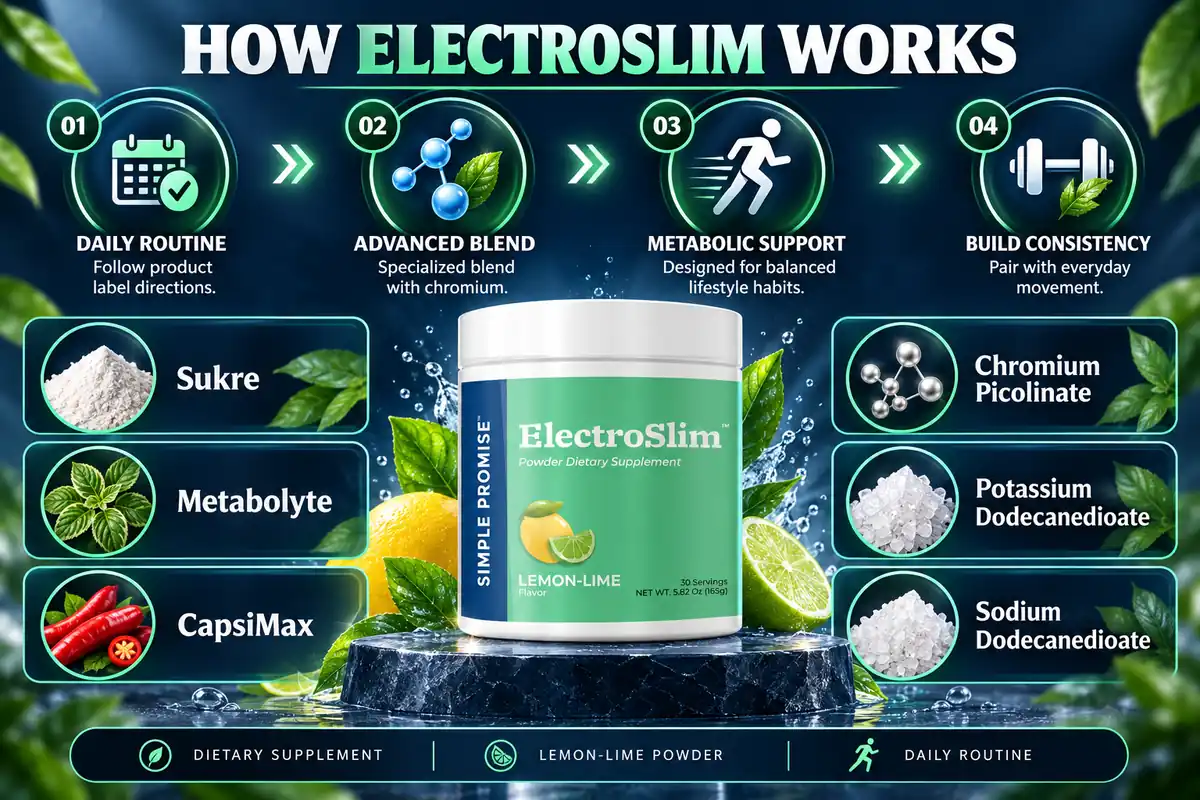
The directions that come with ElectroSlim are short. Adults take one scoop (5.5 g) with any form of water, filtered, carbonated, bottled or from the tap, and for best results take it 20 to 30 minutes before a meal, or as directed by a healthcare professional. That is the whole routine.
It is worth noticing what that sentence is made of. Most of it is water and timing. The scoop is one ingredient in a drink, but the routine itself is “drink a glass of fluid before you eat”, which happens to be one of the most studied small habits in weight research. Our how it works page already says that the pre-meal water habit is a separate and better-supported idea than any ingredient in the tub. This article is the long version of that sentence: what the water-before-meals trials actually did, what they found, and where they stop.
People search for this. Search engines suggest questions such as “how much water should I drink before meals” and “drink water before or after meal”. The honest answer to both has more nuance than most web pages give it.
The first trials: a glass of water and a lunch
The oldest and simplest experiments are single-meal studies. Volunteers eat a buffet-style meal on two occasions. Before one of them they drink water; before the other they drink nothing. The researchers weigh what was eaten without the volunteers knowing.
Older adults
Twenty-four overweight and obese adults, average age 61, were given a 500 mL water preload or no preload 30 minutes before an ad libitum breakfast. They ate about 500 kcal after the water and 574 kcal without it, a reduction of roughly 13 percent, and the effect did not depend on sex, age, body mass index or how much water they normally drank (Davy et al., Journal of the American Dietetic Association, 2008, PMID 18589036).
Younger adults, and the age question
The same research group compared 29 healthy, non-obese young adults (21 to 35 years) with 21 older adults (60 to 80 years). The preload was 375 mL for women and 500 mL for men, 30 minutes before lunch. In the young group there was no difference in what they ate (892 kcal without water, 913 kcal with it). In the older group intake fell from 682 to 624 kcal, and the reduction came mainly from older men. Fullness ratings were higher after water in everybody. The title says it plainly: pre-meal water reduced intake in older but not younger subjects (Van Walleghen et al., Obesity, 2007, PMID 17228036).
That was not the end of the story for younger people. Fourteen non-obese young men drank 568 mL (a pint) of water immediately before a porridge breakfast, less than a minute before eating. They ate about 1,967 kJ with the water and 2,551 kJ without it, and they reported more fullness and satisfaction and less hunger (Corney et al., European Journal of Nutrition, 2016, PMID 25893719). A small study of 15 young adults found they ate less of a test meal after a pre-meal water drink than with no water or with water taken after the meal (123.3 g compared with 161.7 g and 163.3 g), and that water after the meal did not change intake (Jeong, Clinical Nutrition Research, 2018, PMID 30406058).
Put those four together and the picture is patchy but suggestive. A drink of water before eating tends to reduce what is eaten at that meal. The strongest signal is in older adults; younger adults showed an effect when the water was taken right before the meal, and no effect when it was taken half an hour before in the one study that tested that. Every one of these studies is small. The largest had 50 participants.
From one meal to twelve weeks
Eating less at one lunch is not the same as losing weight. Two randomised trials tried the habit for twelve weeks.
In the first, 48 overweight or obese adults aged 55 to 75 followed a lower-calorie diet. Half of them also drank 500 mL of water before each daily meal. Over twelve weeks the water group lost about 2 kg more than the diet-only group, and their rate of weight decline was 44 percent steeper. The same study re-tested the acute effect at week twelve, and it had shrunk: at baseline a water preload cut test-meal intake from 541 to 498 kcal (P = 0.009), while at twelve weeks the difference was 506 against 480 kcal, which was no longer statistically significant (P = 0.069) (Dennis et al., Obesity, 2010, PMID 19661958).
In the second, 84 adults with obesity were recruited from general practices in Birmingham, England. Everyone got a short weight-management consultation. One group was asked to drink 500 mL of water 30 minutes before main meals; the comparison group was asked to imagine their stomach was full before meals. At twelve weeks the water group had lost 1.3 kg more (95% CI 0.1 to 2.4 kg, P = 0.028). After adjusting for ethnicity, deprivation, age and gender the difference was 1.2 kg and no longer crossed the usual significance line (P = 0.063). The authors described it as preliminary evidence of moderate weight loss (Parretti et al., Obesity, 2015, PMID 26237305).
Two things stand out. Both trials paired the water with some form of weight-loss advice, so the water was an add-on to a diet, not a standalone treatment. And both effects were on the order of one to two kilograms over three months, in people who were already trying. That is meaningful for some people and unremarkable for others.
What the broader reviews say
Once you zoom out from these specific pre-meal trials to “drinking more water” in general, the evidence gets weaker, not stronger.
| Review | What it covered | What it concluded |
|---|---|---|
| Muckelbauer et al., 2013 (PMID 23803882) | 11 studies and 2 reviews on daily water and body weight in adults | In people dieting, more water reduced weight over 3 to 12 months compared with the programme alone. In mixed-weight groups, two short trials showed no effect. Overall evidence low. |
| Chen et al., 2024 (PMID 38612997) | 8 randomised trials in overweight and obese people | Pooled body weight change of −0.33 kg (95% CI −1.75 to 1.08), not significant. Swapping sugary drinks for water: −0.81 kg (95% CI −1.66 to 0.03), a modest, borderline benefit. |
| Hakam et al., 2024 (PMID 39585691) | 18 randomised trials of changing daily water intake, all health outcomes | Some studies showed 44% to 100% more weight loss than controls; the authors called the evidence limited in quantity and quality. |
The 2024 meta-analysis is the most cautious. Its overall verdict was that water intake may not significantly change body fatness in people with overweight or obesity, though replacing sugar-sweetened drinks with water might offer a modest benefit. It also reported an uncomfortable-looking result: in the trials that replaced artificially sweetened drinks with water, the pooled difference in body weight was +1.82 kg, which means the water group weighed more. It comes from a subset of the eight trials, and we would not build a habit on that finding either way, but it is a reminder that “water versus something else” depends heavily on what the something else was.
The JAMA Network Open review gathers a wider range of outcomes: weight, fasting glucose, headache, urinary tract infection and kidney stones. It found that extra water was associated with more weight loss and fewer kidney stone events, and it called the number of trials limited. Given water’s low cost and low risk, its authors argued for better trials, which is a sensible thing to say and is not a claim that it works.
How much water, and how long before?
This is the part most articles skip, and it is where a practical reader can act. The trials did not use a standard glass. They used a specific volume, and they used it at a specific time.
| Study | Volume | Timing |
|---|---|---|
| Davy 2008 | 500 mL (about 17 oz) | 30 minutes before breakfast |
| Van Walleghen 2007 | 375 mL for women (about 12.7 oz), 500 mL for men | 30 minutes before lunch |
| Corney 2016 | 568 mL (about 19 oz) | Immediately before breakfast |
| Dennis 2010 | 500 mL | Before each daily meal |
| Parretti 2015 | 500 mL | 30 minutes before main meals |
Two things follow. First, the volumes are bigger than an ordinary drinks glass. An 8 oz glass is about 237 mL, so the trial volumes are roughly one and a half to two and a half of them. Our how it works page suggests stirring one scoop into roughly 8 to 16 oz. The smaller end of that is well below what most of the trials used, and we would rather you knew that than assumed the two match.
Second, the timing on the label, 20 to 30 minutes, sits inside the window most of these studies used, but none of them tested 20 minutes against 30. One study got its effect with water taken immediately before eating, another found nothing in young adults with 30 minutes of lead time, and the small study of 15 young adults found that water after the meal did nothing. The safest reading is that water before a meal seems to matter more than water after one, and that the exact minute count is not well established.
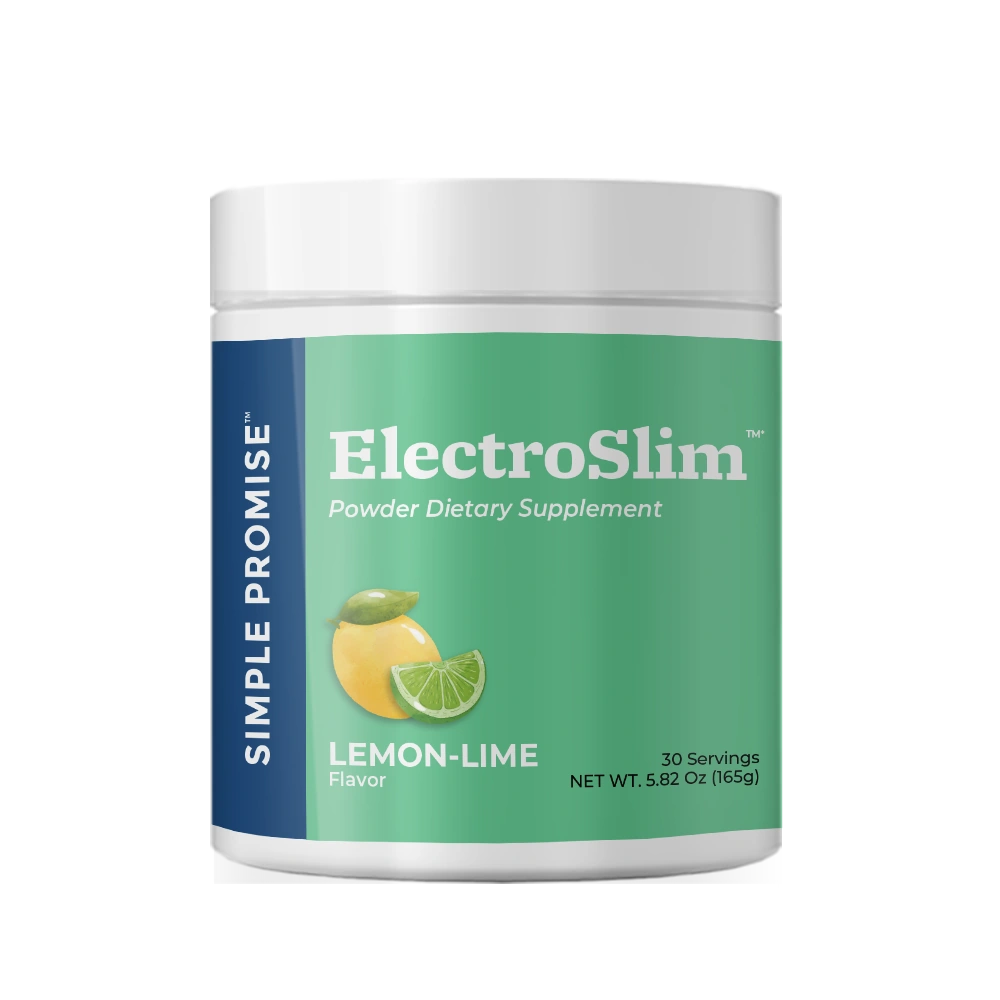
One scoop is 5.5 g. The label routine is that scoop in water before a meal.
Check today’s priceWhat this means for a flavoured powder
Here is the distinction that matters for anyone deciding whether to buy a tub. Every trial above used plain water. None of them tested a flavoured electrolyte powder, and none of them tested ElectroSlim. The finding belongs to the water and the timing. A scoop of powder adds whatever it adds, and what it adds is not known, because the amounts are not published.
There are a few honest ways the powder could matter. A flavour you like can make it easier to actually drink 400 to 500 mL before a meal on a day when you would otherwise skip it. That is our own reasoning, not a finding from these trials, but it is the most plausible role for a lemon-lime powder in this routine, and it is the same one our benefits page calls the most honest benefit. On the other side, we do not know the drink’s calories or sodium. If the scoop contributes calories, it slightly offsets what a zero-calorie water preload would have saved. If it contributes meaningful sodium, that is worth knowing for anyone watching blood pressure, and it is not something we can work out without the panel.
So the fair way to say it is this. If water before meals suits you, ElectroSlim is a flavoured way to do it. If you drink plain water before meals already, nothing in this research suggests the powder improves on it. The water-before-meals literature is a reason to try the habit; it is not a reason to think the tub has an edge.
A two-week experiment you can run
Because the trials are small and the effect is modest, the most useful evidence is your own. This is a simple way to find out whether the habit does anything for you, with or without a powder.
Measure your glass
Fill it from a measuring jug once. Most everyday glasses are well under the 500 mL the trials used.
Pick one meal
Choose the meal where you are most likely to overeat. One meal is easier to keep up than three.
Drink it 20 to 30 minutes before
Set a timer. Sip it, do not gulp it. If you use ElectroSlim, follow the label’s one scoop.
Note two things
How full you feel when the meal starts, and whether you stopped earlier than usual. A line in a notes app is enough.
Compare after two weeks
If you eat the same and feel bloated, the habit is not for you. If you eat a little less and feel fine, keep it, and let the scale be the slow judge.
Our results timeline page has a longer version of the tracking idea. The important part is to judge the habit by what you notice at the table, not by a scale reading in week one, which is dominated by water and food volume.
Who should check first
A pint of fluid before every meal is a lot of extra water for some people. If a clinician has told you to limit fluids, for example because of heart failure or kidney disease, do not start a large pre-meal drink without asking. The same goes for anyone who takes medicine that affects sodium or potassium, and anyone with kidney disease more generally: ElectroSlim names potassium and sodium salts, and the amounts are unknown, which is exactly the situation where you want a clinician who knows your numbers to weigh in. The label already says to talk to a doctor before use if you take medicine.
The trials also studied specific groups. Two of the strongest single-meal effects were in adults over 60, and the two 12-week trials were in adults with overweight or obesity who were also dieting. If you are a lean, healthy younger adult, the evidence is thinner for you, and the small trials in that group are mixed.
The bottom line
Drinking a substantial glass of water before a meal seems to reduce how much some people eat at that meal, most reliably in older adults, and it added about one to two kilograms of weight loss on top of a diet in two 12-week trials. Pooled reviews of water intake in general are more cautious, and the overall result across all such trials was not statistically significant. The effect looks real, small and dependent on who you are.
For ElectroSlim, the takeaway is modest and useful. The label’s timing matches a habit with some real evidence, and a flavoured powder may help you keep it up. The research does not say the powder adds anything to the water, and it cannot, because no trial tested it and its amounts are not published. If you try it, treat it as a two-week experiment with a glass big enough to matter.
Related reading on this site: What electrolytes do, and what they do not do, and CapsiMax and capsaicinoids, which covers the other ingredient the sales page ties to appetite.
Sources
- Davy BM, Dennis EA, Dengo AL, Wilson KL, Davy KP. Water consumption reduces energy intake at a breakfast meal in obese older adults. J Am Diet Assoc. 2008;108(7):1236-1239. doi:10.1016/j.jada.2008.04.013. PubMed PMID 18589036. Checked September 26, 2026.
- Van Walleghen EL, Orr JS, Gentile CL, Davy BM. Pre-meal water consumption reduces meal energy intake in older but not younger subjects. Obesity (Silver Spring). 2007;15(1):93-99. doi:10.1038/oby.2007.506. PubMed PMID 17228036. Checked September 26, 2026.
- Corney RA, Sunderland C, James LJ. Immediate pre-meal water ingestion decreases voluntary food intake in lean young males. Eur J Nutr. 2016;55(2):815-819. doi:10.1007/s00394-015-0903-4. PubMed PMID 25893719. Checked September 26, 2026.
- Jeong JN. Effect of pre-meal water consumption on energy intake and satiety in non-obese young adults. Clin Nutr Res. 2018;7(4):291-296. doi:10.7762/cnr.2018.7.4.291. PubMed PMID 30406058. Checked September 26, 2026.
- Dennis EA, Dengo AL, Comber DL, et al. Water consumption increases weight loss during a hypocaloric diet intervention in middle-aged and older adults. Obesity (Silver Spring). 2010;18(2):300-307. doi:10.1038/oby.2009.235. PubMed PMID 19661958. Checked September 26, 2026.
- Parretti HM, Aveyard P, Blannin A, et al. Efficacy of water preloading before main meals as a strategy for weight loss in primary care patients with obesity: RCT. Obesity (Silver Spring). 2015;23(9):1785-1791. doi:10.1002/oby.21167. PubMed PMID 26237305. Checked September 26, 2026.
- Muckelbauer R, Sarganas G, Grüneis A, Müller-Nordhorn J. Association between water consumption and body weight outcomes: a systematic review. Am J Clin Nutr. 2013;98(2):282-299. doi:10.3945/ajcn.112.055061. PubMed PMID 23803882. Checked September 26, 2026.
- Chen QY, Khil J, Keum N. Water intake and adiposity outcomes among overweight and obese individuals: a systematic review and meta-analysis of randomized controlled trials. Nutrients. 2024;16(7):963. doi:10.3390/nu16070963. PubMed PMID 38612997. Checked September 26, 2026.
- Hakam N, Guzman Fuentes JL, Nabavizadeh B, et al. Outcomes in randomized clinical trials testing changes in daily water intake: a systematic review. JAMA Netw Open. 2024;7(11):e2447621. doi:10.1001/jamanetworkopen.2024.47621. PubMed PMID 39585691. Checked September 26, 2026.
Questions on this topic
More answers on the full FAQ page.
Does drinking water before a meal help you eat less?
In several small trials, yes, at least at the next meal. About 375 to 568 mL of water before eating reduced intake in older adults and in some younger adults. The effect was not seen in every group and appeared to fade in one 12-week trial.
How long before a meal should you drink it?
The trials used 30 minutes before, and one used immediately before. The label says 20 to 30 minutes. We did not find a trial that compared 20 minutes with 30.
Does the powder change what the water trials found?
We do not know. The trials used plain water. ElectroSlim’s amounts and calories are not published, so we cannot say the scoop helps or hurts that effect.
Who should check with a clinician first?
Anyone who has been told to limit fluids, and anyone with kidney disease or on medicine that affects sodium or potassium. Ask before adding a large drink before every meal.
Ready to try ElectroSlim?
Pick a pack and see the price at checkout. The money-back guarantee is 60 days from purchase, unless the sales page prints a longer window. Questions first? Call the order desk at +1 (225) 293-8071.
Sold through a USA authorized ElectroSlim retailer. This site is not the manufacturer and earns when you buy.Keep reading
What electrolytes do
What electrolytes actually are, what sodium and potassium do, and when a drink mix helps.
Read more →CapsiMax and capsaicinoids
What the trials measured for fat burning, appetite and weight, and why the amount matters.
Read more →Sukre and Metabolyte
What two 2026 papers say these trademarks are, and what research exists on each.
Read more →